Board games · Ideas and tactics
Reversi corners and options: inspect the reply before counting flips
See why a corner cannot be flipped and how a diagonal neighbour can give it away. Follow a two-move example and compare the opponent’s options, not just immediate disc gains.
Published: · Updated:
Reversi compares disc counts at the end, but taking many discs now does not guarantee a good result. Examine the opponent’s legal replies after your move. That habit explains why corners matter and helps you evaluate neighbouring squares from the actual position rather than from a memorised warning.
Check brackets in eight directions
This site uses an 8×8 board. The normal setup has four central discs and Black moves first. A legal move places a disc on an empty square and brackets at least one consecutive opposing disc between that new disc and an existing friendly disc. Check horizontal, vertical and diagonal lines in all eight directions; every qualifying line flips.
An empty square interrupts the bracket. A disc flipped during the move does not start another chain of flips elsewhere. Work outward from the newly placed disc, looking for uninterrupted opposing discs followed by a friendly endpoint. This makes both legality and the resulting position easier to track.
Why a corner stays yours
Flipping a corner would require an opposing endpoint on each side along a line through it. At a corner, each possible line ends at the edge of the board. There is no square beyond the corner to supply the other endpoint. Once occupied, a corner therefore remains that colour.
Taking a corner does not guarantee a win. It does supply a disc that survives to the final count. Playing next to an empty corner can sometimes give the opponent the bracket needed to occupy it. Check that reply, including diagonal lines, before choosing a move for its immediate flips.
White’s B2 creates Black’s A1
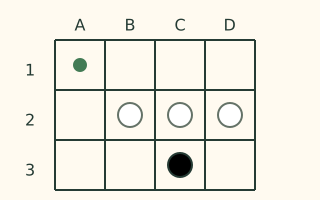
Label columns A–H from left to right and rows 1–8 from top to bottom. In this constructed teaching position, Black has C2 and C3, White has D2, and every other square is empty. White moves next. This small position illustrates reading a reply; it is not the normal starting setup.
White can play B2, bracketing black C2 against white D2. C2 flips white. The figure shows the result immediately after that move. Black can now play A1: along the diagonal, white B2 is followed by black C3. Black flips B2 and takes the corner. White gained one flipped disc but supplied a legal corner move to Black.
A neighbour is not automatically a bad square
In the example, the danger comes from black C3 supplying the diagonal endpoint, not simply from the square name B2. If C3 were empty, that diagonal bracket would not work. You would still need to inspect every other direction and any other legal reply. The post-move board determines the risk.
To compare candidates, confirm your flips first, then imagine the opponent’s turn on the resulting board. Can they take a corner? Have you given them additional placement options? Will you retain a useful move afterward? These questions help explain differences between moves that flip the same number of discs.
Passes and the final count
On this site, a player with no legal move passes automatically. When neither colour can move, play ends even if empty squares remain. The larger number of occupied discs wins, and equal counts draw. Empty squares are not assigned to the winner. Japan Othello Association competition rules use an empty-square allocation for recorded counts, so check the scoring convention before comparing totals.
You can select CPU strength, your side and optional move confirmation. With confirmation enabled, inspect the selected square before committing. For practice, review a move near an empty corner and trace the opponent’s possible corner brackets one direction at a time. The aim is to read the reply that your move creates.
Questions and answers
Does playing diagonally beside a corner always lose?
No. Check whether the opponent has an endpoint that makes the corner legal, and consider the other moves and remaining play in that position.
Can I pass when a legal move exists?
No. This site passes automatically only when that colour has no legal placement. Play ends when neither colour can move.
References
- 日本オセロ連盟競技ルール
Checked: - Rules on this site
Checked: - Rules on this site
Checked: